From Individual to Institution, from Institution to Platforms
Cybersecurity means very different things depending on who is being protected.
For most people, security starts with a phone, an email account or a banking app. Inside a company, the picture is already much bigger: employee accounts, customer records, internal networks, cloud systems and business operations all need protection. Move up another level to a large digital platform and the scale changes completely. One service may be responsible for millions of users, thousands of businesses and infrastructure spread across several countries.
The environment changes. The basic purpose does not.
Security still comes back to three things: keeping information private, keeping it accurate and keeping systems available when people need them.
These are usually described as confidentiality, integrity and availability.
Confidentiality is about making sure information is seen only by the people who are supposed to see it.
Integrity is about knowing that information has not been changed, damaged or manipulated without permission.
Availability is simpler: a secure system still needs to work when it is needed.
Those principles apply whether we are talking about one person's laptop or infrastructure used by millions of people. What changes is the size of the problem and the consequences when something goes wrong.
For that reason, cybersecurity can be looked at through three broad layers: personal, enterprise and platform security.
Personal Cybersecurity
For individuals, cybersecurity is mostly about everyday digital life.
Phones, laptops, email, social media, banking apps, cloud accounts and digital wallets are all obvious targets because they contain either personal information, access to other services or, increasingly, money itself.
The attacks are not always technically sophisticated.
Sometimes it is a fake delivery message. Sometimes it is a login page that looks almost identical to the real one. A reused password from an old breach can be enough to compromise several accounts. A SIM-swap can give an attacker access to verification codes. Malware can quietly collect passwords or session data in the background.
Crypto wallets add another layer of risk.
If someone gets access to a private key or recovery phrase, there may be no reset button and no support desk capable of reversing what happens next. The loss can be immediate.
Most personal security advice is therefore fairly ordinary:
- use different passwords for important accounts,
- turn on multi-factor authentication,
- install updates,
- be suspicious of unexpected links and attachments,
- back up important files,
- check account and privacy settings from time to time.
None of this sounds particularly advanced, and that is exactly the point.
Many attacks still succeed because somebody is rushed, distracted or convinced that a message is genuine. Good security tools matter, but they cannot make every decision for the person using them.
Personal cybersecurity is partly technical. A large part of it is simply learning when not to click, approve, download or share.
Enterprise Cybersecurity
A company has a different problem.
It is no longer trying to protect one person's accounts. It may be responsible for hundreds or thousands of employees, customer information, internal applications, servers, cloud services, payment systems, production environments and intellectual property.
There is also much more to lose.
A successful attack can stop operations for hours or days. Customer data may be exposed. Production can be interrupted. A company can face regulatory action, legal costs and reputational damage at the same time.
IBM Security reported that the average global cost of a data breach reached $4.45 million in 2023.
That figure is useful because it puts the issue into perspective. A cyber incident is not simply a technical failure that the IT department fixes before everyone goes back to work. In a serious case, it becomes a business problem very quickly.
Companies also face attacks from several directions.
Ransomware is an obvious example, but phishing, business email compromise, insider threats, supply chain attacks, DDoS campaigns and data theft are just as relevant. An attacker does not necessarily need to find a dramatic zero-day vulnerability. A forgotten administrator account or an employee password can be enough.
This is why enterprise security is built in layers.
Identity and access controls matter. So do network segmentation, endpoint monitoring, patching, logging, backups and recovery planning. Larger organizations may operate SOC teams and use SIEM, SOAR, EDR or XDR tools to detect unusual activity and respond faster.
Zero Trust has also become part of that discussion: do not assume a user, device or connection should be trusted simply because it is already inside the network.
Then there is compliance.
Depending on what a company does and where it operates, requirements such as ISO 27001, PCI DSS, NIS2 or HIPAA may come into play.
But compliance and security are not the same thing. Passing an audit does not make an organization immune to attack.
People remain part of the equation.
An employee who approves the wrong login request, an administrator who grants more access than necessary or a team that delays an important patch can create an opening that no policy document can close afterwards.
The security department may coordinate the work, but the company's exposure is shaped by decisions made across the organization.
Platform-Based Cybersecurity
Platform security takes the same problem and magnifies it.
Think about a large cloud provider, social network, fintech company or Web3 service. These businesses are not only protecting their own employees and systems. They are running infrastructure other people rely on.
That changes the consequences of failure.
A vulnerability in one authentication service might expose huge numbers of accounts. An API problem can leak data at scale. A cloud outage can affect companies that have nothing to do with the original incident except for the fact that they depend on the same provider.
At this level, the infrastructure becomes more complicated too.
Platforms may be managing data centers, APIs, microservices, payment systems, user sessions, cloud workloads, large data environments and, increasingly, AI systems.
Attackers know the value of that scale.
Credential stuffing can be automated across millions of accounts. Botnets can generate enormous amounts of traffic. Public APIs can be abused. Open-source dependencies can introduce vulnerabilities that are difficult to spot quickly. A zero-day in a widely used component may create exposure before a patch even exists.
Cloud and identity security have become particularly important areas in recent threat reporting from companies such as CrowdStrike and IBM X-Force.
The practical difference at this scale is that security cannot depend on people watching dashboards all day and responding manually to everything they see.
Automation is unavoidable.
Platforms use controls such as web application firewalls, anti-bot systems, rate limiting and automated detection. Security testing is increasingly built into development through DevSecOps, SAST, DAST and software composition analysis. Encryption, HSMs and key-management systems protect sensitive data and credentials. Machine-learning tools may help identify behavior that does not fit normal patterns.
Large providers may also work under frameworks and certifications such as SOC 2, ISO 27017, ISO 27018 and CSA STAR.
Still, one of the easiest things to misunderstand about platform security is who is responsible for what.
A cloud provider can secure its data centers, hardware and underlying services. That does not mean every application built on top of them is automatically secure.
Customers still make choices about permissions, account access, configurations and data.
A provider can do everything correctly on its side while a customer accidentally leaves a storage environment publicly accessible.
The opposite is also possible.
This is the idea behind shared responsibility. Both sides are involved, but they are responsible for different parts of the system.
The Real Difference Is Scale
The line between personal, enterprise and platform security is not really about different definitions of cybersecurity.
It is about how far the damage can travel.
If an individual account is compromised, one person may lose access, money or private information.
If the same kind of weakness exists inside a company, employees, customers and business operations can all be affected.
At platform level, the consequences can spread much further. A service outage or security failure may reach millions of users and thousands of organizations at once, sometimes across several countries and regulatory environments.
The larger the system becomes, the less room there is for informal security.
A person can remember to update a laptop manually.
A company with several thousand endpoints needs a process.
A platform with millions of users needs that process to work continuously and, in many cases, automatically.
That is probably the clearest difference between the three levels.
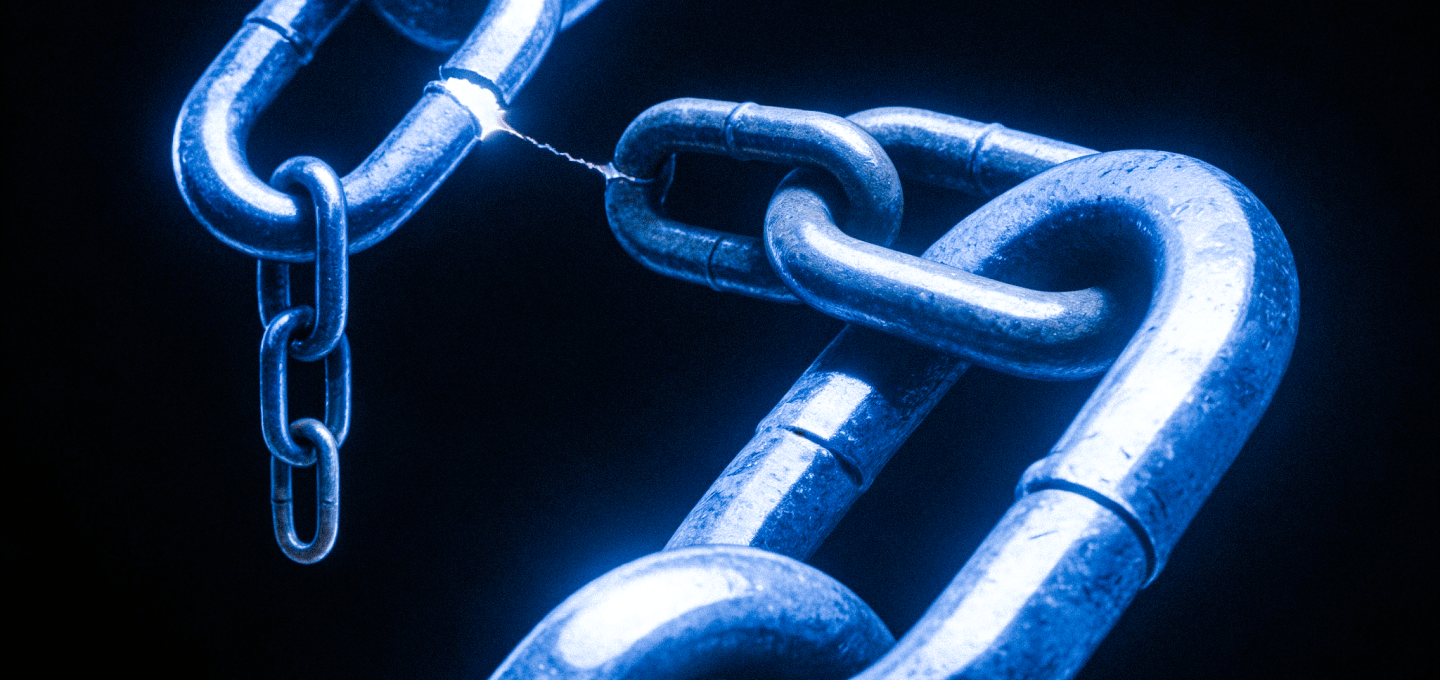
One Security Chain
Personal security, enterprise security and platform security are often discussed separately, but in practice they constantly overlap.
A platform can have excellent internal security and still have users lose accounts to phishing.
A company can spend heavily on detection technology and still be compromised through one stolen employee credential.
An individual can follow every sensible security practice and still be affected when a service they trust suffers a breach.
No part of the system operates completely on its own.
Users depend on companies. Companies depend on platforms. Platforms, in turn, still depend on employees, suppliers, developers and users making sensible security decisions.
That is why cybersecurity is difficult to reduce to software, policies or compliance requirements alone.
It is really about trust between all of these layers.
And that trust only works when each part of the chain does its job.
Disclaimer
This content is for informational purposes only and does not constitute legal, technical, financial or cybersecurity advice. Cybersecurity risks and requirements differ depending on the organization, industry, jurisdiction and technology environment. Individuals and organizations should assess their own circumstances and seek qualified professional advice where necessary.



%201.svg)