Is It Safe to Leave Bluetooth On?
Bluetooth is everywhere.
We use it for headphones, smartwatches, cars, keyboards, speakers, and dozens of other devices. Because it works quietly in the background, many people leave Bluetooth switched on all day without thinking about it.
That does not automatically make your phone unsafe. But Bluetooth security still matters.
Where Do Bluetooth Risks Come From?
Most problems are not caused simply by Bluetooth being enabled.
The bigger risks usually involve Bluetooth pairing, outdated software, unnecessary device visibility, or connections to devices you do not recognize.
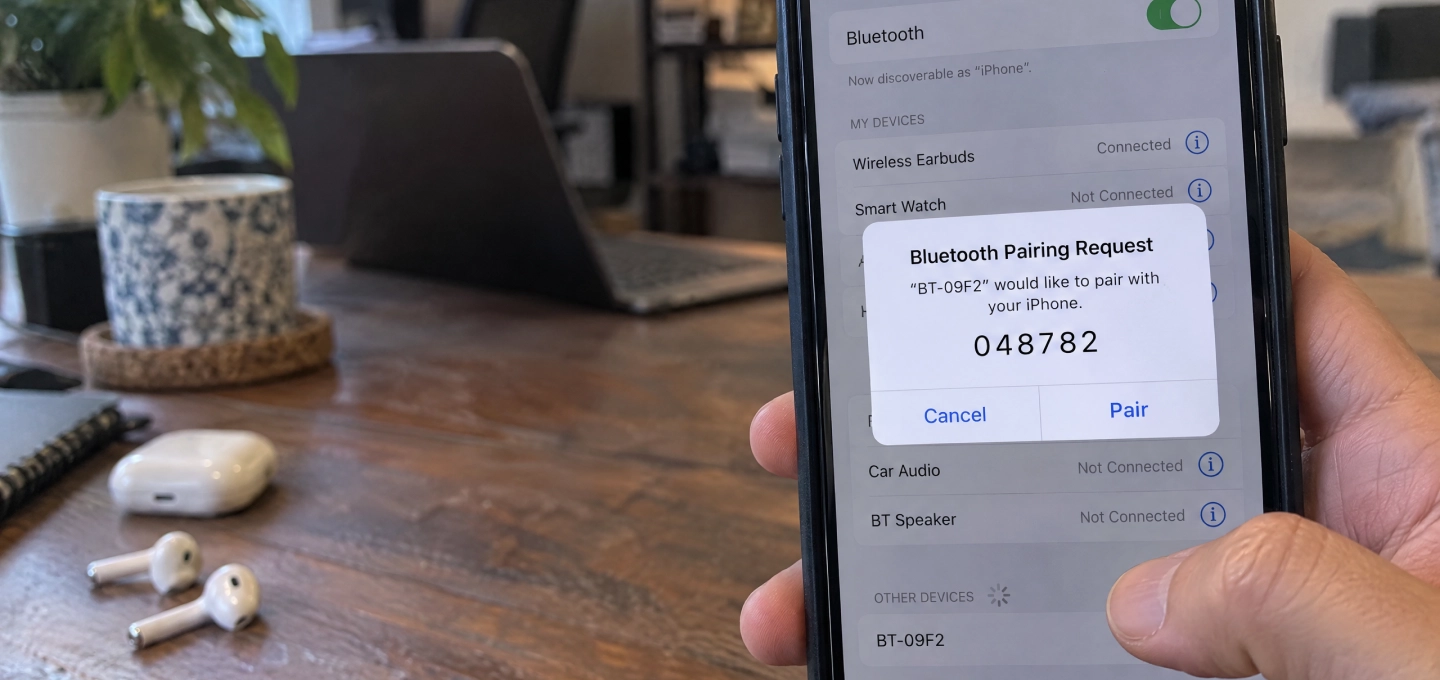
If you accept an unexpected pairing request, for example, you may connect to something you did not intend to trust.
Older or poorly secured devices can also contain vulnerabilities that increase the chance of unauthorized access or data exposure.
What Could Happen?
In some situations, weak Bluetooth security may expose device information, contact details, or other data shared through connected services.
There is also a privacy angle.
Bluetooth signals can sometimes be used for device tracking or proximity monitoring, especially when devices continuously broadcast identifying information.
For accessories such as headsets, vehicle systems, or microphones, an unauthorized connection may also create privacy concerns around audio or communications.
None of this means every Bluetooth connection is dangerous.
The risk depends heavily on the device, software version, settings, and whether the connection has been properly authorized.
Simple Bluetooth Security Habits
You do not need to keep Bluetooth permanently disabled.
A better approach is to remove old paired devices, reject connection requests you do not recognize, keep your phone and accessories updated, and limit discoverability when it is not needed.
It is also worth checking your Bluetooth device list occasionally. You may find connections you created months or even years ago and no longer use.
Bluetooth is designed for convenience.
Using it securely mostly comes down to knowing which devices you trust and making sure that trust is still justified.
Leaving Bluetooth on is not automatically dangerous. Connecting to the wrong device can be.
Disclaimer
This article is intended for informational, educational, and cybersecurity-awareness purposes only. Bluetooth features, security settings, and available controls may vary depending on the device, operating system, and software version. Users should follow official manufacturer guidance when changing security or connectivity settings.



%201.svg)